This guide explains how to maintain artificial grass properly, including cleaning tips, pet care advice and simple maintenance steps to keep your artificial lawn looking its best.
Artificial grass lawns are designed to be extremely low maintenance, however a small amount of occasional care will help keep your lawn looking fresh, clean and natural for many years.
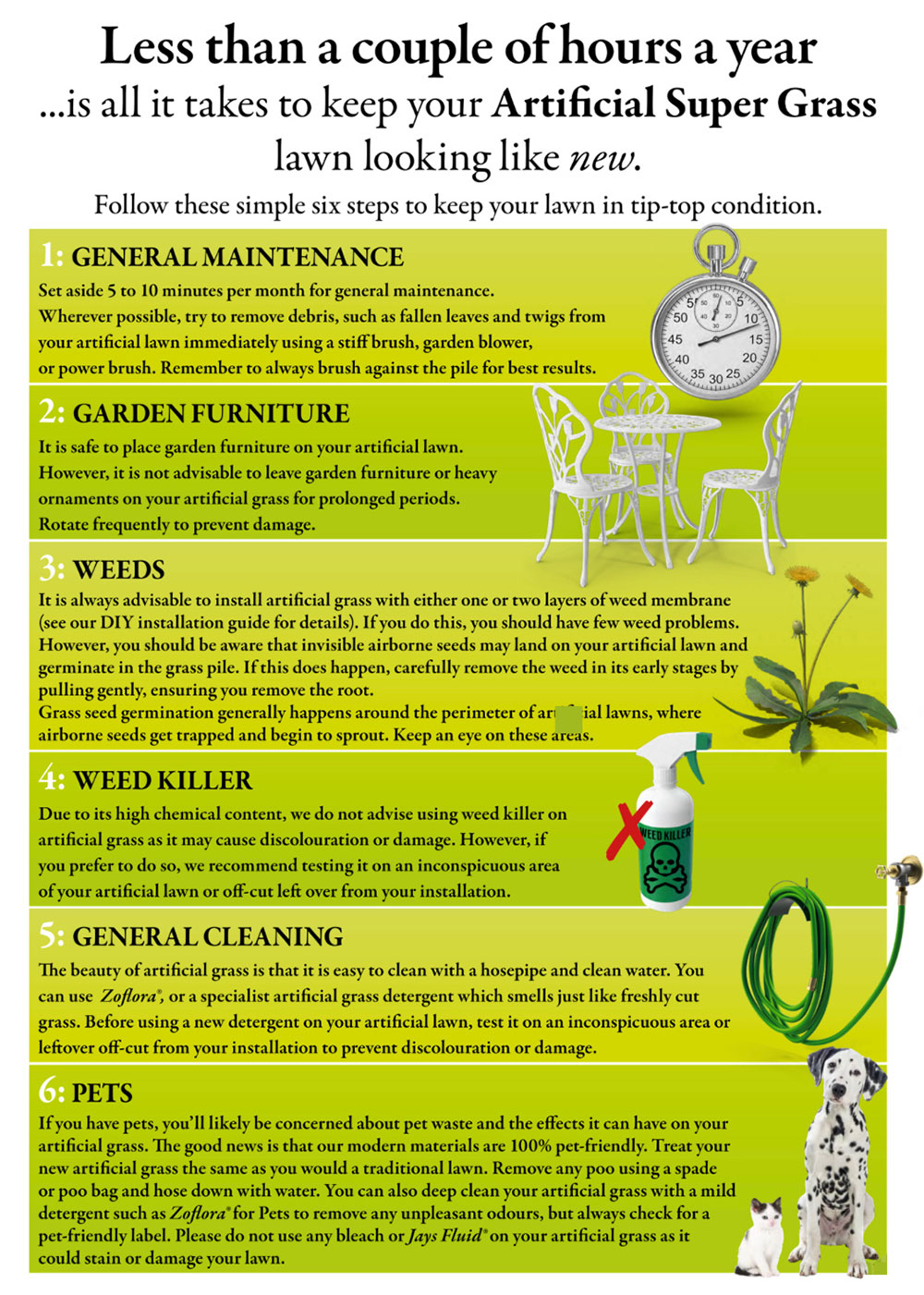
In most cases, maintaining artificial grass takes less than a couple of hours per year. By following a few simple maintenance steps, you can keep your artificial lawn in excellent condition and ensure the grass fibres remain upright and natural looking.
Below are six simple artificial grass maintenance tips that will help keep your lawn looking its best.
General Artificial Grass Maintenance
Set aside 5 to 10 minutes per month for general maintenance.
Where possible, remove debris such as fallen leaves, twigs and organic material from the surface of the artificial grass. This can easily be done using a stiff brush, leaf blower or power brush.
Brushing the grass occasionally also helps lift the fibres and maintain a natural appearance. For the best results, brush the grass against the direction of the pile.


Cleaning Artificial Grass
One of the main benefits of artificial grass is how easy it is to clean.
For general cleaning, simply rinse the grass with clean water using a hosepipe. This will remove dust, pollen and light dirt from the surface.
If a deeper clean is required, a mild detergent or specialist artificial grass cleaner can be used. Always test any cleaning product on a small inconspicuous area before applying it across the lawn.
Artificial Grass and Pets
Modern artificial grass products are completely pet friendly and designed to cope with everyday pet use.
Pet waste should be removed in the same way as it would be on a natural lawn. Solid waste can be picked up using a scoop or bag, while liquid waste can be rinsed away with water.
If required, a mild pet-safe cleaning product can be used to remove any odours from the grass surface.
Avoid using harsh chemicals such as bleach or strong disinfectants, as these may damage the grass fibres.


Garden Furniture on Artificial Grass
Garden furniture can safely be placed on artificial grass without damaging the lawn.
However, it is not recommended to leave very heavy furniture or ornaments in the same position for long periods of time, as this may flatten the grass fibres.
If possible, rotate furniture occasionally to allow the grass fibres to recover and maintain an even appearance across the lawn.
Removing Weeds from Artificial Grass
Artificial grass is usually installed with a weed membrane beneath the surface, which helps prevent weeds from growing through the lawn.
In some cases, airborne seeds may land on the surface of the artificial grass and begin to grow within the grass pile. If this occurs, weeds can normally be removed easily by pulling them out by hand.
Weeds are most likely to appear around the edges of artificial lawns, where wind-blown seeds can collect.


Avoid Using Weed Killer
We generally do not recommend using weed killer on artificial grass, as some chemical weed treatments may cause discolouration or damage to the grass fibres.
If you prefer to use a weed treatment, always test the product on a small hidden area or off-cut of artificial grass first to ensure it does not cause any damage.
In most cases, weeds can simply be removed by hand without the need for chemical treatments.
How Often Does Artificial Grass Need Maintenance?
Artificial grass requires very little ongoing maintenance compared to natural grass lawns.
Occasional brushing, removing debris and rinsing the surface with water will usually be enough to keep your lawn looking fresh and natural throughout the year.
Because artificial grass does not require mowing, watering or fertilising, it remains one of the lowest maintenance garden landscaping options available.


How to Remove Pet Smells from Artificial Grass
If you have dogs or other pets using your artificial lawn, you may occasionally notice a build-up of odours, particularly during warm weather.
Pet urine can sometimes leave a smell if the area is not rinsed regularly. Fortunately, artificial grass is designed with a permeable backing which allows liquids to drain through the surface.
To keep artificial grass smelling fresh:
- Rinse the area regularly using clean water from a hosepipe
- Remove solid waste as soon as possible
- Occasionally use a pet-safe artificial grass cleaner
- Brush the grass fibres to maintain airflow through the pile
For areas where pets frequently urinate, a quick rinse with water every few days will usually prevent odours from developing.
With basic cleaning, artificial grass remains hygienic and suitable for households with dogs and other pets.
Artificial Grass Maintenance FAQs
Artificial grass usually only needs occasional cleaning. Removing debris and rinsing the lawn with water a few times per year is normally enough to keep it looking fresh.
Artificial grass can be lightly pressure washed if required, but a hosepipe and brush are usually sufficient for regular cleaning.
Artificial grass does not normally smell if it is rinsed occasionally with water. Pet urine drains through the backing, helping keep the lawn hygienic.
Related Artificial Grass Installation Guides
Planning your artificial grass project properly helps reduce waste, minimise joins and achieve the best possible finish.
You may also find these guides helpful when planning your artificial grass project: