
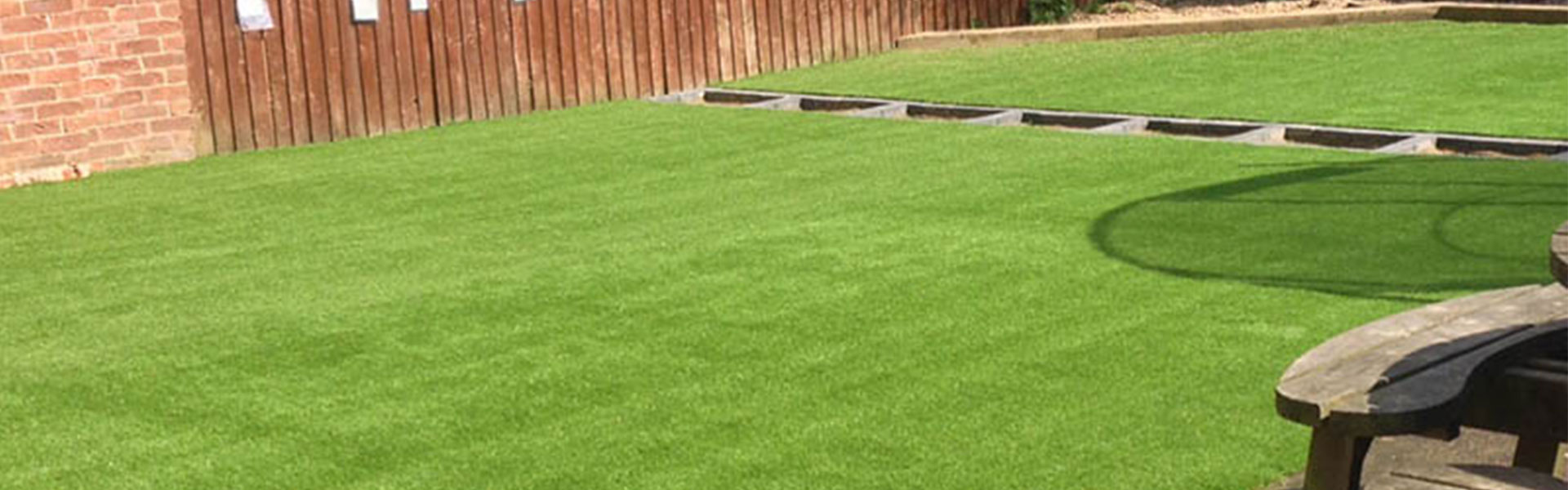
How To Install Artificial Grass in Scunthorpe onto Decking
Has your decking seen better days? Would you like to upgrade your outdoor space with Artificial Grass in Scunthorpe? Then why not combine the two and transform your decked area into a lush evergreen garden with our complete guide on how to install artificial grass onto decking.
Gardening Trends 2020
In the 1990s it was all about decking. It featured in every garden makeover programme on TV, and it featured in almost every garden across the UK, and while it is still a popular landscaping material in many parts of the country, an increasing number of homeowners are switching to artificial grass. Why? Well, it's low maintenance, eco-friendly, and it adds colour and character to outdoor areas. It's a hassle-free landscaping solution that you can install on almost any surface, and thanks to advances in technology and manufacturing processes, it looks more realistic than ever before.
Synthetic grass is the gardening trend of the decade, with the global market estimated to be around £3bn (yes, billion), it seems more and more of us are ditching the lawnmower in favour of this maintenance-free gardening material. But what do we do with our decking?
The good news is you can put imitation grass directly onto your decked area to create that lush green lawn that you have always dreamed of, and with no need to excavate your garden for installation, it costs less than you think.
Benefits of Installing Artificial Grass on to Wooden Decking
Fitting artificial turf on decking is not only a great way to improve the aesthetics of your outdoor space, but it comes with a list of benefits:
Say Goodbye To Decking Maintenance: When it is newly installed, decking looks great, but it needs a lot of annual maintenance to keep it looking its best. Regular cleaning and restoring is essential to protect it against the elements and, in the case of wooden decking, you need to apply paint, stain, or specially formulated oil to prevent rotting, fading, and mould. With synthetic grass, the only thing you have to do it power brush it to keep the blades standing upright and hose it down occasionally to remove surface debris.
No More Slippery Surfaces: One of the main problems with wooden decking, is that it becomes incredibly slippery when wet. Here in the UK, we are known for our inclement weather conditions, particularly in Scunthorpe where it rains throughout the year, and this can transform decking into a serious slip-hazard. Autumn leaves, moss, and frost add to the problem, and if you have young children or elderly relatives, it can be dangerous. Imitation grass is specifically designed
not to be slippery when wet, and as it drains immediately, you’ll never have to worry about waterlogging and flooding.
Enjoy a Green Lawn Year-Round: Decking fades in the sun, it’s a fact of life, and while composite decking generally retains its colour, wooden decking doesn't. Superior artificial grass is UV protected and designed to retain its natural green appearance for at least 10-years, so you can install it with confidence, knowing that it is money well-spent.
In this step-by-step guide, we'll explain exactly how to fit artificial grass on top of decking, and create a luxury entertainment area that you can use all year round.
Installing Artificial Grass on Decking.
The first thing you need to establish is if your decking was correctly installed. Does it have solid foundations? Does it have a weed membrane to restrict weed growth? Does it drain well? If you can answer yes to these questions, then we can safely assume that your decking is suitable for fake grass application.
You can lay astroturf on wooden decking, but preparation is essential, particularly in the case of timber decking which can and will rot if left untreated.
Step 1: Prepare Your Workspace
- Clear your decking, removing any furniture, fixed structures such as pagodas, plant pots, and BBQ's, so that you have a blank canvas.
- Brush and hose-down your decking to remove surface dirt. Let it dry, and then scrub it with a mild detergent to remove any dirt, moss, or mould that has accumulated in the corners and between panels, rinse again and leave to dry.
- If you notice any broken, rotten, or warped decking boards, replace them to create a smooth surface with no potential trip hazards.
- Check your weed membrane to ensure it is still intact and functioning as it should. If you can see weeds coming through, you should replace the weed membrane if possible, or if you cannot access it, pull out any weeds within reach, and install a new weed membrane in step two.
- Measure the gradient of your decking to ensure that it hasn’t sunk and that it still drains effectively. Artificial turf is pre-punched for drainage, but water needs an escape route to prevent problems underneath the decking, so it is essential to check this before installing it.
- Treat your decking to preserve and protect against mould, woodworm, algae, and rotting.
Step 2: Fit Weed Membrane & Underlay
- If your existing weed membrane is damaged or ineffective, install a new one one underneath to prevent weeds coming up through the decking and ruining the appearance of your synthetic turf.
- Next, you need to apply artificial grass underlay that will not only assist with drainage but will also smooth out any deep grooves in your decking and stop the boards from showing through the turf. You could apply impact-absorbing padding at this stage, particularly if you want to create a cushioned play area for young children.
Step 3: Install Artificial Grass
- Now that you have prepared your decking, you can lay your artificial grass. Start by rolling it out on top of the decking to decide which direction you would like the blades to face. Fake grass comes in tightly packed rolls, and so the synthetic fibres lean to one side when unrolled. It rectifies itself naturally over time, but it essential to make sure your turf runs the same direction, especially if you are joining one or more rolls. It is preferable to have the blades facing towards the house or most focal area.
- We recommend securing your artificial grass with rust-resistant screws. To achieve a professional finish, use a heavy plank or batton to weigh the seams down as you work so that you can create an invisible seal. Take extra care when working around corners, you may find that you need additional material here, so only trim it at the last minute.
- Once you are happy with the installation of your Artificial Grass in Scunthorpe, remove any weights and surplus materials, and brush it with a stiff broom or power brush to elevate the blades and create a uniformed look.
Now that you have installed imitation grass on decking, you can entertain alfresco all year round, but you should complete the following maintenance tasks to keep it looking its best:
- Take extra care to remove debris and autumn leaves to ensure it drains quickly.
- Remove pet waste as soon as possible, rinsing with a bucket of water or hose where necessary, to prevent the build-up of unpleasant odours.
- Brush regularly with an artificial-grass power brush, leaf blower or a stiff garden broom to keep the blades standing upright. It is particularly important to do this in high-traffic areas, such as children’s playgrounds, and during the summer months when you spend more time in the garden.
It is not uncommon for decking to expand during the warm summer months, and so your synthetic turf could move slightly, particularly on larger decks. To prevent this altogether, you could ask your local artificial grass company to fit it for you. With years of experience in the field, professional astro turf installers know how to avoid these common pitfalls. Alternatively, wait until autumn to see if the problem fixes itself. It usually does.